CPAP overnight, humidifier and heated tube on
How much more battery does a CPAP need with the humidifier on?
The heated humidifier is the largest variable in CPAP backup sizing. Treating it as the same load as a dry machine understates the battery by enough to matter, which is why the device library keeps them as two separate entries.
The answer
- Battery to shop
- 937 Wh
- Daily energy
- 664 Wh
- Startup surge
- Not modelled
- All devices at once
- 92 W
Nameplate capacity, after inverter loss and a 20 percent reserve, for 1 day.
2 devices after duty cycle, before conversion losses.
No startup inrush value is entered. Check device and adapter specifications.
Continuous output the station has to hold if nothing is staggered.
Heating increases the estimated energy and continuous draw. Startup inrush is not modelled in this example; it is not confirmation that a power source is compatible.
The load, row by row
| Device | Watts | Hours | Duty | Wh per day |
|---|---|---|---|---|
| CPAP / BiPAP (humidifier and heated tube ON)Heating adds roughly 25 to 50 W, and the heater cycles through the night. | 80 W | 8 h | 100% | 640 Wh |
| Phone chargeOne phone charge, for scale next to the machine. | 12 W | 2 h | 100% | 24 Wh |
| Total | 664 Wh |
Duty cycle is the share of each hour a device actually draws power. A compressor fridge cycles, so its average draw sits well below its nameplate.
What this load needs from a station
- Capacity.At least 937 Wh of nameplate capacity, which is 664 Wh of daily draw divided by 85 percent inverter efficiency and multiplied by a 1.2 reserve.
- Continuous output.At least 92 W if every device runs at once, or less if you stagger them.
- Startup surge.Startup inrush is not modelled for these rows. Check the device and adapter requirements; a missing surge value is not proof that no inrush occurs.
- Solar, if you plan to recharge off grid.About 156 W of panels to replace a day of draw in 5 peak sun hours. Check the station's published solar input limit, because a larger array than it accepts is wasted.
Verified models whose nameplate covers this estimated load (44)
Smallest nameplate that clears every calculated limit, first. These are not lab runtimes. They are not therapy ratings. Confirm compatibility with your equipment provider.
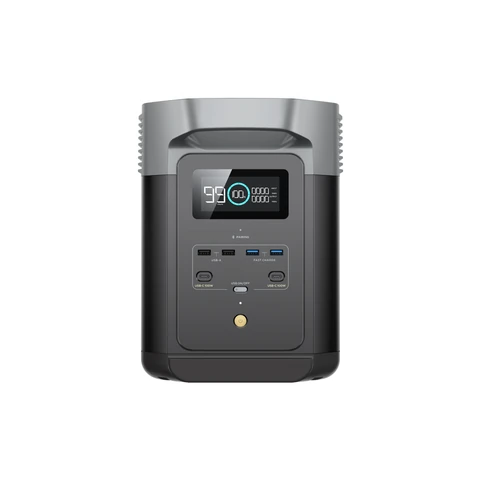 EcoFlow DELTA 2Smallest that fits1,000 Wh / 1,800 W · boost only · 63 Wh spare
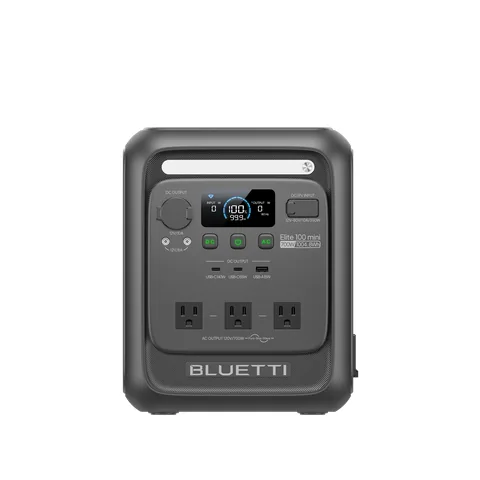 BLUETTI Elite 100 mini1,005 Wh / 700 W · boost only · 67 Wh spare
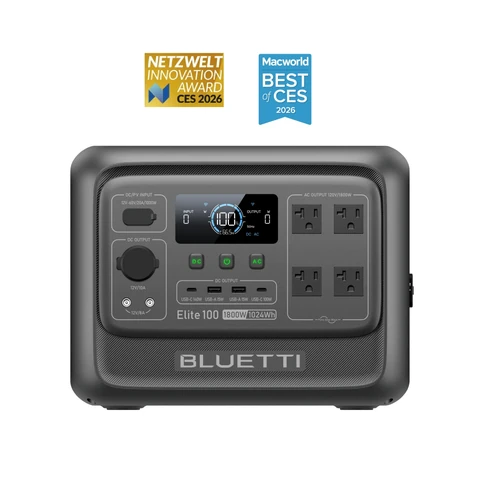 BLUETTI Elite 100 V21,024 Wh / 1,800 W / 3,600 W surge · 87 Wh spare
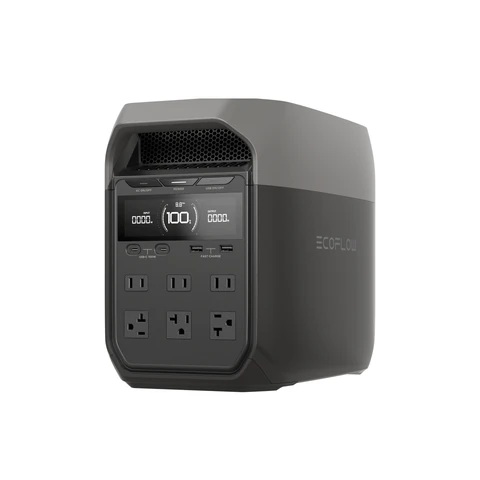 EcoFlow DELTA 31,024 Wh / 1,800 W / 3,600 W surge · 87 Wh spare
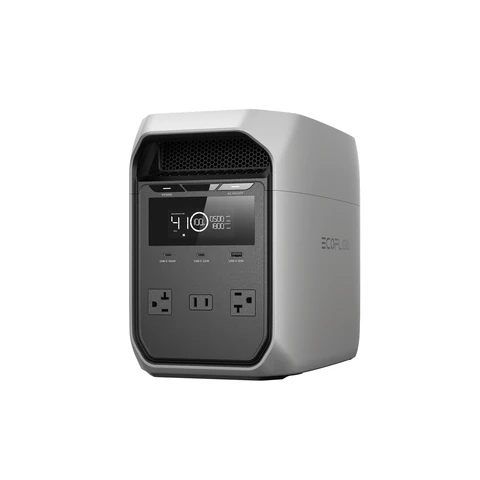 EcoFlow DELTA 3 Classic1,024 Wh / 1,800 W / 3,600 W surge · 87 Wh spare
45 models in the database publish a resistive boost rating instead of an inverter surge, so they are not counted here. Their capacity is still listed on their own pages.
What to cut if nothing fits
Only change humidifier or heated-tube settings if your equipment provider or clinician confirms that the change is appropriate for your prescribed therapy. Otherwise size the backup for your usual settings.
Questions
Why is the humidifier treated as a separate device?
Because collapsing the two into one default produces an answer that is wrong in the direction that matters most. A dry machine and a heated one differ by roughly half the recommended capacity.
Is a power station a medical device?
No. A portable power station is a consumer battery, not a medical device, and it is not a substitute for the battery system your equipment manufacturer specifies. Confirm your backup plan with your equipment provider and your clinician before an outage.
The formulas and constants behind every figure on this page are documented on themethodology page. Source URLs for the specifications sit on eachmodel page.