Fridge backup
Can a portable power station run a refrigerator?
The power is out. The fridge is still full. You need the compressor to start, not a watt-hour average on a spec sheet.
The short answer
For a full-size fridge at 150 W running, 35 percent duty, and about 1,200 W startup, shop roughly 826 Wh and a station that publishes inverter surge at or above 1,200 W. Continuous output is easy. The start is not.
A 12V camping fridge is a different machine: about 500 W start. Many mid-size packs that publish surge will clear it. Anker C1000's 2,400 W figure is SurgePad. This catalog does not treat that as a compressor start.
What a fridge actually draws
A refrigerator is a compressor with a thermostat, not a 150 W heater. Most of the hour it sits idle. When the thermostat calls, the motor starts, draws a spike, then settles to running watts. Energy in watt-hours is the easy part. The spike is why a station with enough battery can still click and fail.
This site splits those into three checks: watt-hours, continuous watts, inverter surge. Passing one is not passing the others.
The 2,000 W number is misleading
Search this topic and you will see "2,000 W output runs a fridge" repeated on retail pages. That claim skips the label next to the number.
The context behind "peak watts"
Some manufacturers publish inverter surge: the inverter can hold a motor inrush for a short time. Others publish a resistive boost (X-Boost, Power Lifting, SurgePad) that the same page limits to heat-generating loads. Both can print 2,000 W or 2,400 W. Only the first is used here against a compressor.
Think of it like a car's top speed. Accurate on a test track. Useless if the number is for a different gear. Thesurge versus boosttable lists which verified models publish which kind of peak.
How the hours are calculated
The home example is eight hours of fridge, router, lights, and a phone charge. Raw energy is 585 Wh. After 85 percent inverter efficiency and a 20 percent reserve, the shop figure is 826 Wh. Usable capacity on a match is 85 percent of nameplate.
| Device | Running | Duty | Energy | Start |
|---|---|---|---|---|
| Home refrigerator (full size) | 150 W | 35% | 420 Wh | 1,200 W |
| Wi-Fi router / modem | 12 W | 100% | 96 Wh | — |
| LED lamp | 9 W | 100% | 45 Wh | — |
| Phone charge | 12 W | 100% | 24 Wh | — |
Fridge watts are an estimated engineering range. Your compressor may draw more or less.Open this load in the calculator.
Home fridge, 12V fridge, or a boost pack
The question is not only "will it run." It changes with the compressor and with whether the peak on the box is surge.
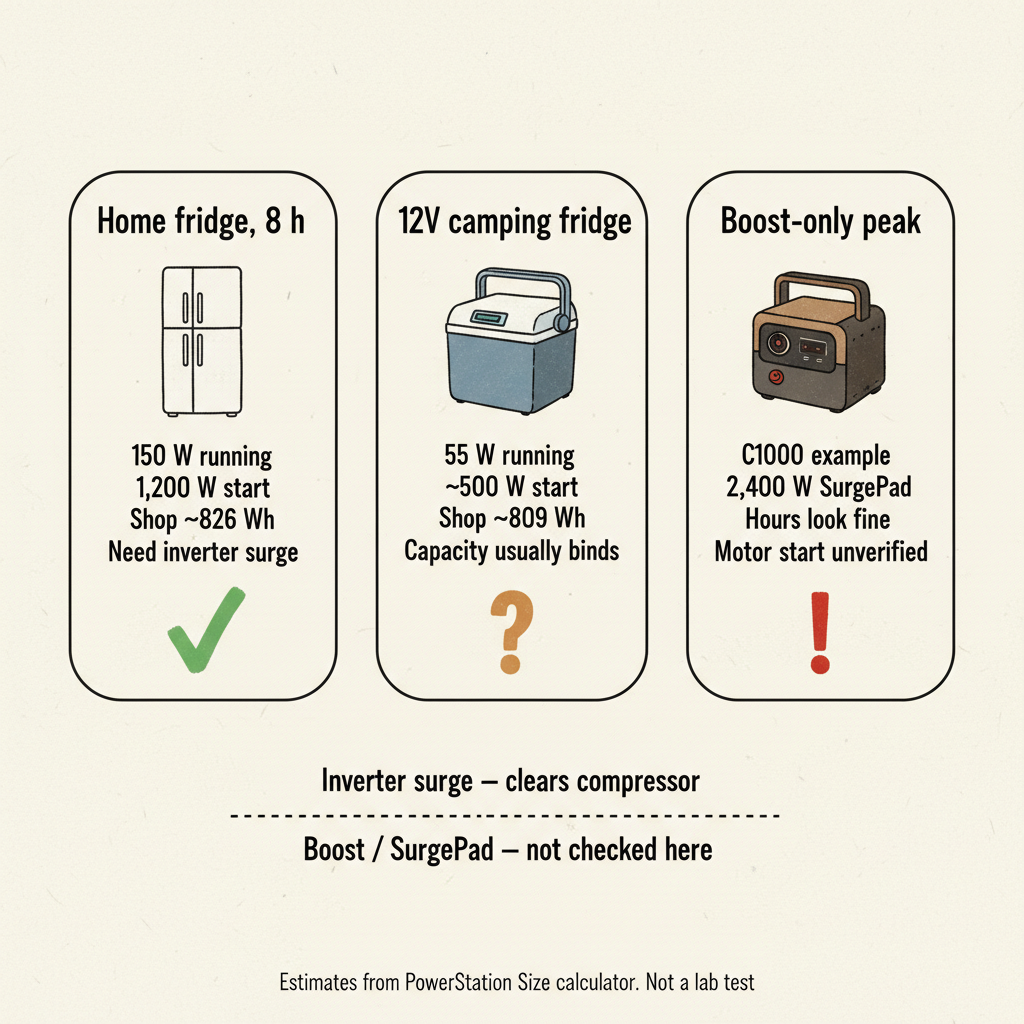
| Load | What it usually means | Next |
|---|---|---|
| Home fridge, 8 h | Shop about 826 Wh. Start ~1,200 W. Need published inverter surge. | Run the calculator |
| 12V camping fridge, 12 h | Shop about 809 Wh. Start ~500 W. Capacity usually binds first. | Camping picks |
| Boost-only peak | Hours may look fine. Motor start stays unverified. C1000 is the worked example. | C1000 vs Elite 100 V2 |
Three stations on the same home-fridge load
Same calculator rows. Hours use 85 percent usable capacity. Affiliate links may earn a commission.
Scenario 1
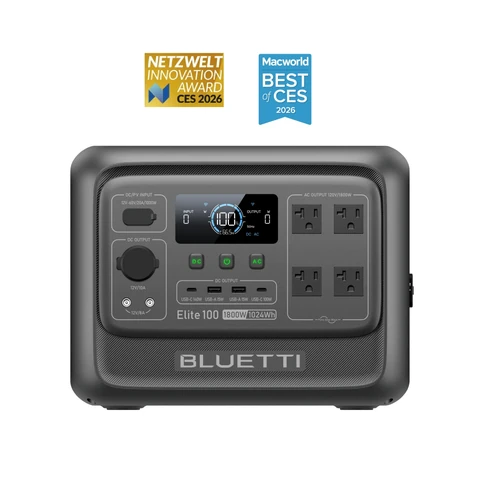
BLUETTI Elite 100 V2
1,024 Wh · 1,800 W continuous · 3,600 W inverter surge
- Home fridge (est.)
- Clears this load
- 10.2 h
- Camping 12V (est.)
- Clears this load
- 8.5 h
Scenario 2
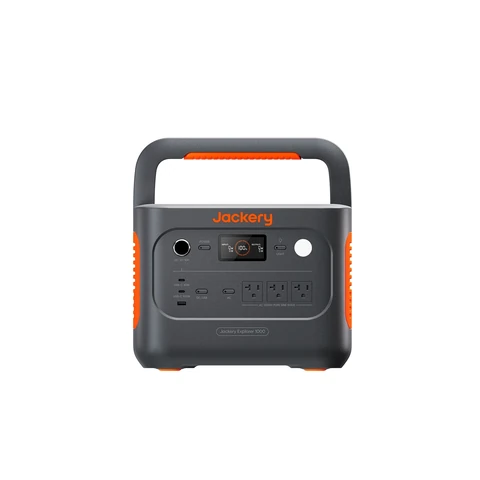
Jackery Explorer 1000 v2
1,070 Wh · 1,500 W continuous · 3,000 W inverter surge
- Home fridge (est.)
- Clears this load
- 10.6 h
- Camping 12V (est.)
- Clears this load
- 8.8 h
Scenario 3
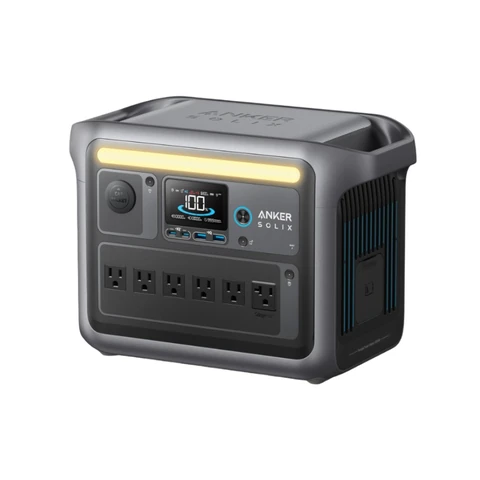
Anker SOLIX C1000
1,056 Wh · 1,800 W continuous · 2,400 W boost
- Home fridge (est.)
- Boost only, not checked
- 10.5 h
- Camping 12V (est.)
- Boost only, not checked
- 8.7 h
The surge label changes everything
This is the factor retail copy skips. Elite 100 V2 and Explorer 1000 v2 publish inverter surge and clear the home-fridge start in this catalog (about 10 hours estimated). C1000 holds similar watt-hours. Its peak is SurgePad, so the same load is surge-unverified.
If you only need a CPAP or phone charging, C1000 still covers those estimates. Do not buy it to start a compressor on the 2,400 W print.
What will not help
A bigger battery with the same inverter
Extra watt-hours extend hours after the compressor starts. They do not start it. A 2 kWh pack with a boost-only peak still fails the surge check on this site.
Matching running watts only
150 W continuous is common. The 1,200 W start is the gate. Spec sheets that quote only output without saying surge versus boost are incomplete for this job.
Plugging the station into a wall outlet
Never backfeed household wiring through a wall or dryer outlet. Whole-home backup needs a manufacturer-approved transfer or isolation system, installed by a qualified electrician where required.
Time, if the inverter cannot start the motor
Waiting does not change a boost rating into surge. Swap the station, or run a 12V fridge that this catalog will actually check.
Frequently asked questions
Can a portable power station run a refrigerator?
Yes, if it clears three checks: about 826 Wh for an eight-hour home-fridge outage in this catalog, enough continuous watts for ~150 W running, and a published inverter surge at or above ~1,200 W. A 2,000 W peak labelled X-Boost, Power Lifting, or SurgePad is not used here as a motor start.
How many watt-hours to run a fridge for 8 hours?
A full-size fridge at 150 W and 35 percent duty uses about 420 Wh in eight hours before inverter loss. After 85 percent efficiency and a 20 percent reserve, this catalog shops about 826 Wh, plus router and lights in the worked example.
Why does a fridge need so much more peak than running watts?
The compressor motor draws a brief inrush when it starts, often several times the running wattage. Energy in the battery does not start that motor. Inverter surge does.
Will a 2,000 W power station start my fridge?
Only if that 2,000 W is inverter surge. If the spec sheet calls it boost, X-Boost, SurgePad, or Power Lifting, this site treats motor start as unverified.
Is a 12V camping fridge easier than a home fridge?
Yes. The camping example uses about 55 W running and ~500 W start. Mid-size stations that publish inverter surge usually clear it. Capacity, not output, is the usual limit.
Related reading
Calculate your own estimate
Change fridge watts, hours, or drop the router. The result names which limit fails first.